
Last updated: October 14, 2026 | ESPAÑOL
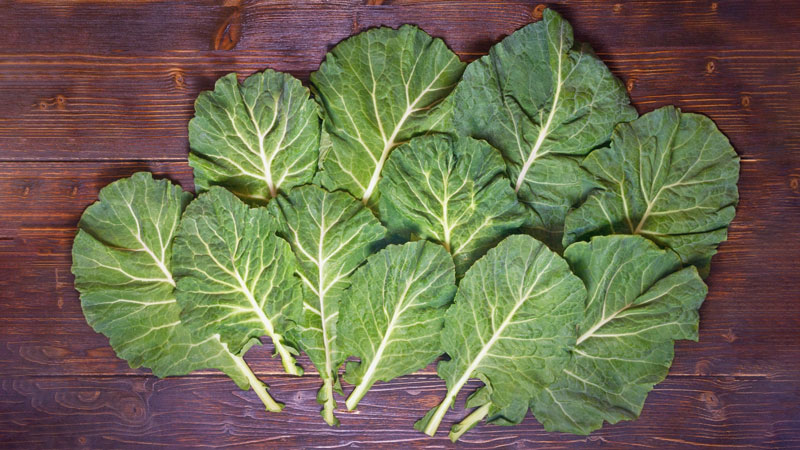
Collard greens are part of the cruciferous or cabbage family, same as kale, mustard greens, and turnip greens. This means that they are a great source of sulforaphane, a phytochemical with strong anti-cancer properties.
Aside from this plant super power, collard greens are very nutritious. Just like other dark leafy greens, they are very rich in vitamin K which is vital for our bones. They’re also a great source of calcium, and since collards are low in oxalates and rich in vitamin K, we can absorb and break down a good amount of this calcium.
Other important nutrients we can get include vitamin A, folate, vitamin C, vitamin E, and manganese. This means they also support our vision, immunity, heart, reproduction, early development, brain, metabolism, and more. Plus, they’re a good source of lutein and zeaxanthin, two phytonutrients present in dark greens that help protect our eyes from macular degeneration due to aging.
We can eat collards raw or cooked, but they can be hard and more bitter when raw. Always remove the stems, and consider cutting the leaves into thin slices before cooking them so that you can enjoy a softer side of them. As with other cruciferous vegetables, cut or slice them at least 40 minutes before cooking to allow for its sulforaphane to activate. Otherwise, the heat will destroy one of its precursors, myrosinase enzyme, and you won’t be able to reap its benefits. Once formed, sulforaphane is heat resistant.
Collard Greens Nutrition Calculator

References